| Sarah Cloyce: A Spirit Imprisoned |
 |
| Return to Empower! Quarterly Women's Health Newsletter web site |
 |
| By Cathy Hartt, RN, CNM, MS |
| music: Granny (The Witch Song) www.angelfire.com/ks/tomes2/CalontirSongs/granny.htm |
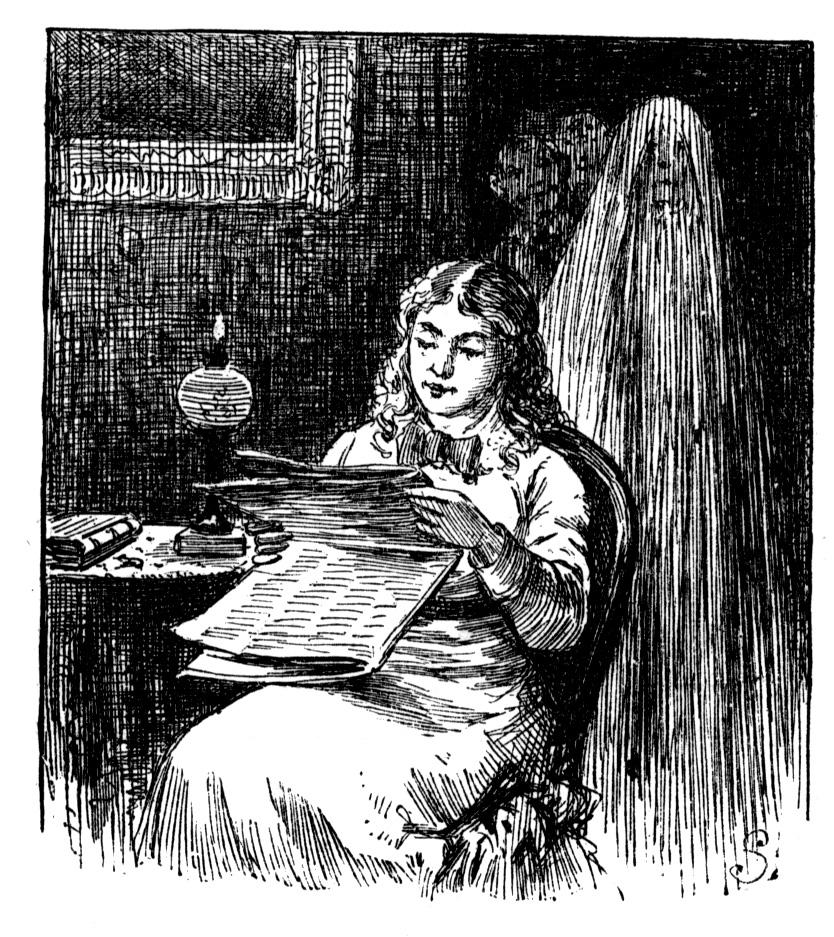
| She stormed out of church services on Sacrament Sunday, most probably outraged by the meaning of the minister's message. A meaning that implied her sister, Rebecca Nurse, was a Devil. To stand up for a sister accused of witchcraft (during Puritan times) was enough to be named as a witch in and of itself, as Sarah Cloyce would find out in Salem Village in 1692. A few days before this particular Sunday in history, a well-known Reverend Lawson had visited Salem Village to assist with the witch crisis. It seems the teen girls of the village were now seeing more and more witches in their midst - the village was full of fear. Rev. Lawson's sermon supported the use of spectral evidence in the trials, feeling it was better to accuse the innocent than to allow a Devil to go free. The sermon was rushed into print with the endorsement of many of the most prominent ministers in that time and region. Then Salem's own minister, Reverend Parris, gave a similar sermon during Sacrament Sunday on April 3rd - Just after Sarah's sister, Rebecca Nurse, was accused of witchcraft. The service opened peacefully and the afflicted girls were present, as usual. The title of the sermon that day was "Christ knows how many Devils are in his church and who they are." The title would bring to mind Sarah's sister, as Rebecca was the first active church member accused of witchcraft in the community. A stunning event for just about everyone because Rebecca had been a model Puritan citizen during her ~70 year-long life. Reverend Parris went on to name a Biblical text about Judas that states, "I have chosen you twelve and one of you is the Devil." At this, Sarah stood up and left the church - some say she slammed the door and others say the door was slammed shut by the wind when she left so abruptly. What matters, however, is that she left the church in defiance just after the text was read. In such times, it is no wonder that Sarah became the next witch to be cried out upon by the young girls. In fact - this happened before the service concluded that day - they soon claimed to see her spector in communion with the Devil. "Oh Goodwife Cloyce, I did not think to see you here. Is it time to receive the sacrament? You ran away on the Lord's Day and scorned to receive it in the meeting house, and is this a time to receive it? I wonder at you!" stated one of the girls in testimony. Sarah was younger than her sisters, Rebecca Nurse and Mary Easty: She is only 48 in 1692. The Movie, Three Sovereigns for Sarah, depicts Sarah as the most rebellious of the three accused sisters. She had time to flee due to a delay in her arrest warrant. She chose to stay and to fight during the hearings, despite the urgings of male family members who told her she was only one woman and could not hope to win. She fought based on her own interpretation of the Bible and cause of the witch hunts. She could even recite the Lord's Prayer perfectly in court (something a witch could not do), only to have the girls fly into fits - saying they could see the Devil whispering the words into her ear on the witness stand. At this point in the trial, Cloyce nearly fainted. She asked for water, only to have the afflicted girls accuse her spirit of leaving the court (with the fainting) to visit her sister, Rebecca, in jail. After the trial, a Putnam family member (a close friend of Reverend Parris and active in the witch hunt hysteria) is said to have stated that is was no surprise about Rebecca and Sarah being witches - for their mother was an accused witch years before. Shortly after, Putman's eight week old baby died and Putman felt the cause of the death was that the child had been tortured by Nurse and Cloyce because of what he had said about them. His testimony about the death of his child is an example of spectral evidence and was an important part of the convictions against both sisters. Unlike her sisters Rebecca and Mary, Sarah lived. Her trial was, for some reason, delayed (perhaps because of over crowding of the jails during the witch craze) until after the trials had been stopped. Sarah was imprisoned for nearly a year - and during a time when accused witches immediately lost all their possessions and had to pay room and board to their jailors. One can only imagine what went through Sarah's mind during and after her imprisonment and the loss of her two sisters. One can only wonder if she struggled with survivor guilt, post traumatic stress dysorder, or rage during her latter years on earth. According to some sources, she did everything she could to clear her sisters' names after the witch hunts came to an end. It seems likely that she fought the injustice she saw until her dying days - just as she had in church on April 3rd, 1692. Perhaps the words that the afflicted girls used against her (when she nearly fainted) were not so far from the truth - that her spirit was imprisoned along side her sister(s), even when she was physically absent from them. Sarah, like Rebecca Nurse, is my great X 7 aunt. Mary Easty is my great X 6 grandmother. In our next issue of Empower! we will look at the case of a less historic accused witch, Elizabeth Hart(t), who is also my great X 6 grandmother. Empower! will also be investigating the dynamics that feed into witch hunts and how this relates to modern day witch hunts. Stay tuned to future issues. |
 |